 N

Trending: Solomon Islands and Australia sign treaty to keep foreign bases out Hottest news
The Pacific nation agrees to bar foreign military installations in return for a decade of Australian aid.
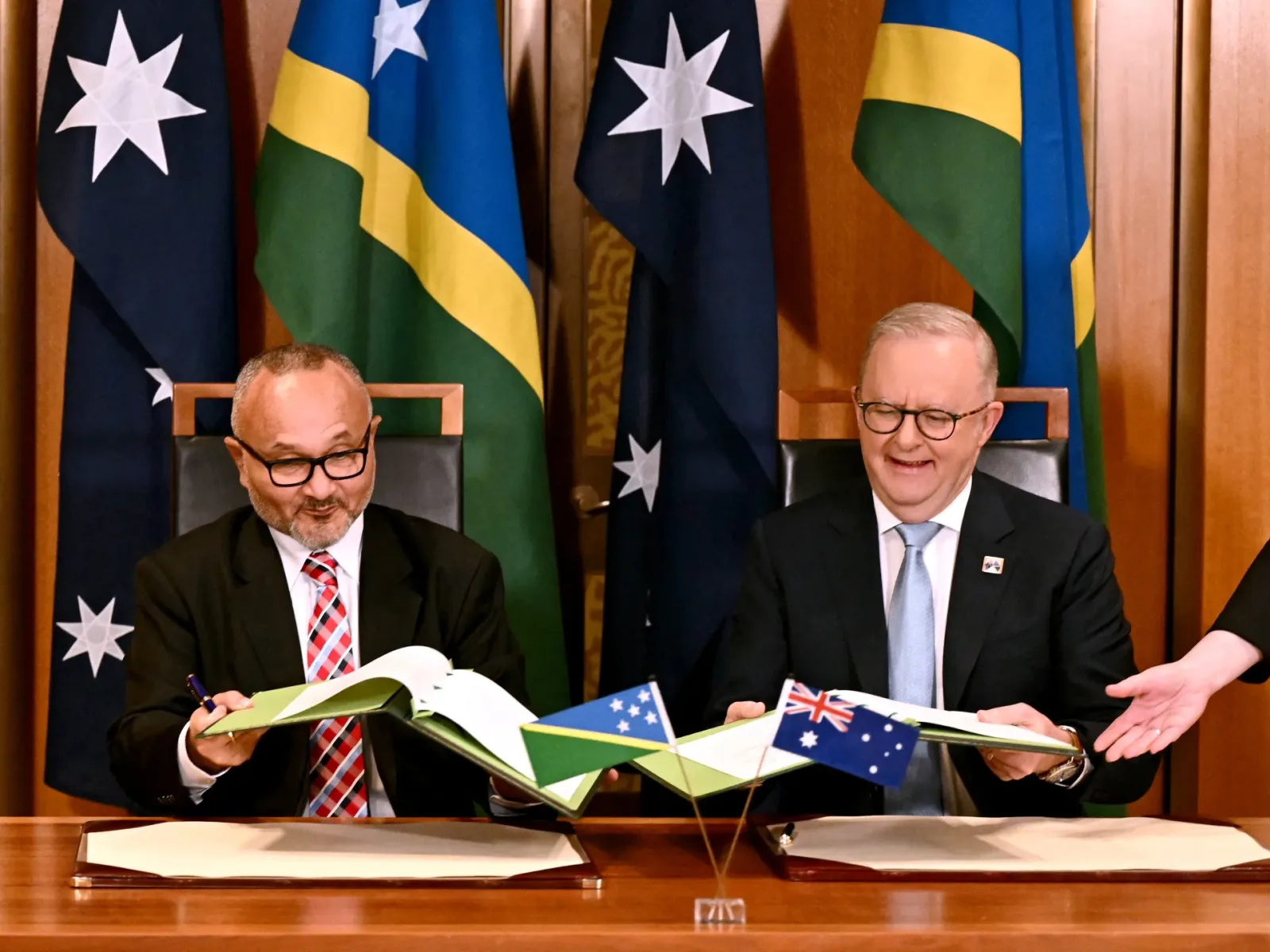 Image: Al Jazeera Download
On Wednesday, officials from the Solomon Islands and Australia formalised a bilateral treaty that bars any foreign military or security installations on Solomon Islands territory. The signing took place in Honiara and marks a strategic shift in the South Pacific.
Key provisions of the agreement
The accord designates Australia as the Solomon Islands’ primary security partner. According to Al Jazeera, Breaking News, World News and Video from Al Jazeera, Canberra will commit 740 million Australian dollars, roughly 490 million US dollars, over the next ten years. The funding is earmarked for free education and a range of development programmes.
In return, the Solomon Islands government pledged that no foreign military or security bases will be permitted on its soil. The treaty also obliges the island nation to keep its sensitive infrastructure free from militarisation, foreign interference and unauthorised access. This covers ports, airports, energy and telecommunications networks, as well as road and bridge projects, sectors where Chinese investment has been prominent through the Belt and Road Initiative.
The agreement does not apply retroactively. It also requires the Solomon Islands to consult Australia before concluding any deals that involve critical infrastructure or security cooperation, unless the partner is a member of the Pacific Islands Forum.
Regional implications
The deal is widely viewed as a setback to China’s growing influence in the Pacific. Over recent years, Beijing has deepened ties with the Solomon Islands, financing infrastructure that now forms part of its broader regional strategy. By sealing the new pact, the Solomon Islands aligns more closely with Australia and, by extension, the United States.
Australia has pursued similar security arrangements with other Pacific neighbours, including Papua New Guinea, Vanuatu and Fiji. These agreements collectively aim to limit the presence of external military forces in the region.
Political backdrop
Prime Minister Matthew Wale, elected in May, has redirected the Solomon Islands away from Beijing and toward Canberra. Speaking alongside Australian Prime Minister Anthony Albanese, Wale said, "Those days are gone," referring to a period of uncertainty for the region.
"Those days are gone," Prime Minister Matthew Wale told journalists.
When asked about a previously reported secret security pact with China, Wale said discussions with Beijing remain ongoing. China’s Ministry of Foreign Affairs did not confirm whether the earlier arrangement has been terminated, but cautioned that the new treaty should not be aimed at any third party.
What happens next
Under the treaty, any future project involving critical infrastructure will need Australian consultation, unless the partner belongs to the Pacific Islands Forum. The ten‑year aid package is expected to support education and other development goals, while the security clause seeks to keep the islands free of foreign militarisation.
Further reading
For more context on this story, explore these trusted outlets.