 N

Trending: BepiColombo prepares for Mercury orbit after eight‑year trek Hottest news
ESA and JAXA's joint probe is set to enter Mercury's harsh environment, aiming to resolve long‑standing mysteries about the planet.
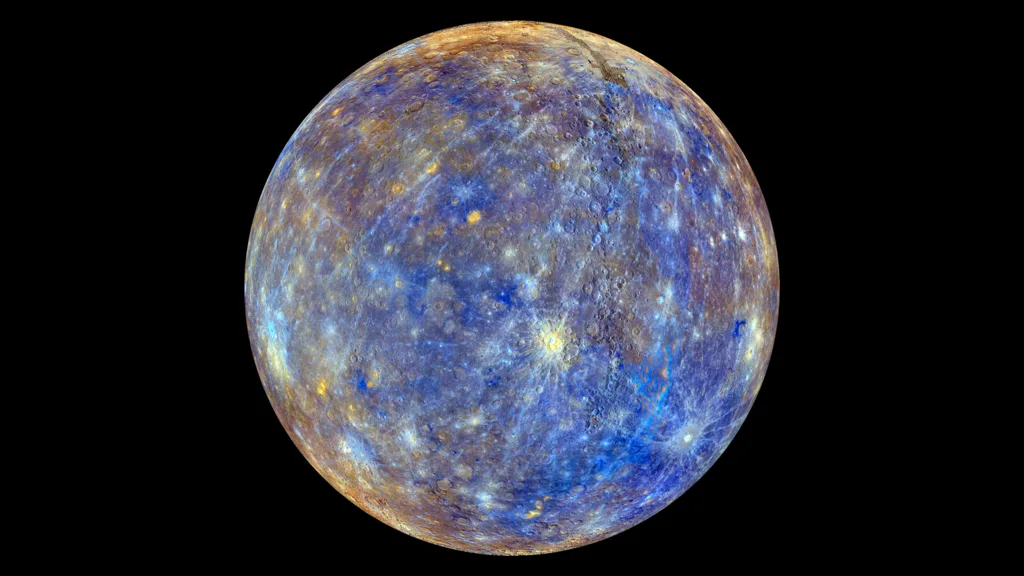 Image: BBC News Download
After eight years and almost six billion miles of cruising, the ESA‑JAXA partnership BepiColombo is finally about to touch Mercury and start its orbital dance, BBC News says.
From launch to the final brake
The probe roared off the Guiana Space Centre on 20 October 2018, then wove a cosmic tour that included a 1‑day Earth swing‑by, two close fly‑bys of Venus in 2020 and 2021, and six daring swoops past Mercury to bleed off speed. Those maneuvers were essential; Mercury’s feeble gravity can only snag a craft that has already slowed itself down. A glitch in the cruise thruster’s software forced engineers to re‑program the engine, shaving a whole extra year off the timetable and stretching the original seven‑year plan.
Now the mission hinges on a 37‑minute engine burn that will act like a handbrake, letting Mercury’s pull settle the spacecraft into a stable orbit. One slip and the probe would zip right past the planet.
Scientific objectives
Mercury is still a mystery box in the inner Solar System. BBC News notes its surface flips from a blistering 430 °C under the Sun to a bone‑chilling -180 °C in permanent shadows, all while a torrent of solar radiation batters the terrain.
Scientists hope to answer why water ice clings to shadowed craters despite the Sun’s proximity, and what forged the shallow pits dubbed “hollows.” These steep‑sided depressions, only a few hundred meters across, look fresh, about 100 000 years old, and don’t match any impact signatures.
Another head‑scratcher is Mercury’s outsized iron core. Professor Emma Bunce of Leicester University suggests the planet may have shed much of its mantle in a colossal collision early on, or it might have formed in a metal‑rich pocket of the nascent Solar System.
"One of the explanations is that the mantle was stripped away in a large collision," Bunce told BBC News.
Dual‑orbiter design
BepiColombo carries two tightly linked spacecraft. Once they arrive, the ESA‑built Mercury Planetary Orbiter (MPO) will dive close to the surface, while JAXA’s Mio will linger in a higher orbit to watch from afar. Airbus systems engineer Jessica Marshall, who helped design the probe, likened the separation to a delicate spring‑release.
"It's been exposed to harsh radiation and wildly different temperatures, and after eight years this spring mechanism has to release very gently… As it releases, it actually also twists to start the spin of that spacecraft as well," Marshall said.
Together the orbiters host a suite of instruments that will map magnetic fields, sniff surface composition, and track how the solar wind scrapes Mercury’s exosphere.
What happens next
Once the spacecraft slips into orbit, a months‑long series of scientific campaigns will kick off. The low‑altitude orbiter will scan polar craters for ice, while Mio charts the planet’s magnetic environment. The data streaming back to Earth will sharpen models of planetary formation and let researchers compare Mercury’s story with Earth’s and Venus’s.
The team also expects surprises. NASA’s Mariner‑10 and MESSENGER left many corners of Mercury untouched, so BepiColombo may uncover things nobody even imagined.
Further reading
For more context on this story, explore these trusted outlets.