 N

Trending: Waymo pauses all freeway rides after California violations Hottest news
Repeated construction zone errors and a traffic‑break breach led the autonomous‑driving firm to suspend interstate service.
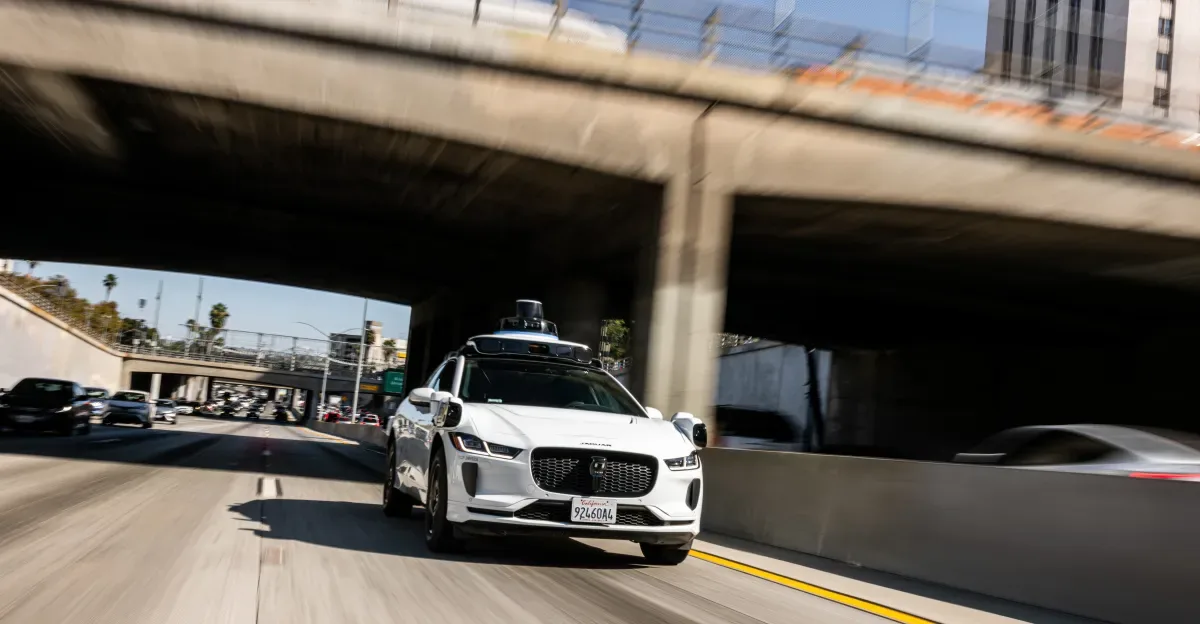 Image: The Verge Download
Waymo, the self‑driving unit of Alphabet, announced on November 26 that it is halting commercial freeway trips across every U.S. market after a series of rule violations and a California DMV ban. The latest incident occurred on November 6 on Interstate 280, where a robotaxi attempted to pass two California Highway Patrol cruisers during a traffic break. The ban, issued last week, bars Waymo vehicles from all state interstates.
Recent freeway violations
According to The Verge, the November 6 video shows the driverless car overtaking the patrol cars, an act that could trigger a license suspension for a human driver. Between October and November 2026, Waymo reported eleven separate cases in which its fleet entered lanes closed for construction, despite clear markings. Those incidents were disclosed in a recall filed with the National Highway Traffic Safety Administration.
- Attempted overtake of police cruisers on I‑280
- Eleven construction‑zone incursions in a two‑month span
- Previous halts in Arizona and California after similar errors
The pattern of freeway missteps follows a June recall that allowed the company to resume operations in late July. The Verge notes that the recall did not eliminate the problems, as the same types of violations resurfaced shortly after the software update.
Recall and safety concerns
Phil Koopman, emeritus professor at Carnegie Mellon University, warned that Waymo’s approach resembles applying “Band‑Aids” rather than fixing core perception flaws. He told The Verge, “The most concerning part about this is now we have a pattern for Waymo: They issue a recall, it doesn’t fix the problem, but they keep scaling up anyway.” Koopman adds that subtle contextual cues, such as a gap in construction cones or a police hand signal, can confuse end‑to‑end machine‑learning models that lack explicit rule sets.
Waymo also filed a recall after an intersection crash in which a vehicle ignored a police officer’s stop command once traffic blocked the officer’s view. The company later updated its software so the fleet can retain manual traffic signals even when the officer disappears from sight. Additional recalls have addressed instances of robotaxis passing stopped school buses and driving through flooded roadways. Koopman suggests that dynamic geofencing and real‑time GPS feeds are being used as temporary workarounds.
“Freeway driving is one of those things that’s very easy to learn, but very hard to master,” said Dmitri Dolgov, co‑CEO of Waymo, in a November 2025 briefing.
Waymo’s spokesperson, Chris Pappas, emphasized that the ride‑hailing service remains safe on surface streets, handling over half a million trips each week. He added that the company is cooperating with the California DMV and other officials to develop a path back to interstate operation.
What happens next
The DMV order requires Waymo to cease all interstate activity until it can demonstrate compliance with state traffic rules. The firm has indicated it will work with regulators to redesign its perception stack and testing protocols. Analysts note that restoring confidence may involve a phased re‑entry, beginning with limited routes and extensive monitoring.
Waymo’s long‑term growth plan relies on freeway capability to reach high‑traffic destinations such as airports. Until the company resolves the identified edge cases, its expansion on high‑speed corridors will remain on hold, and passengers may continue to experience longer trips that avoid highways.
Further reading
For more context on this story, explore these trusted outlets.