 N

Trending: UN Climate Talks Stumble as AI Data Centers Spike Energy Demand Hottest news
COP31 in Turkey ends without a binding agreement, as rapid growth of AI‑driven data centers raises new emissions challenges.
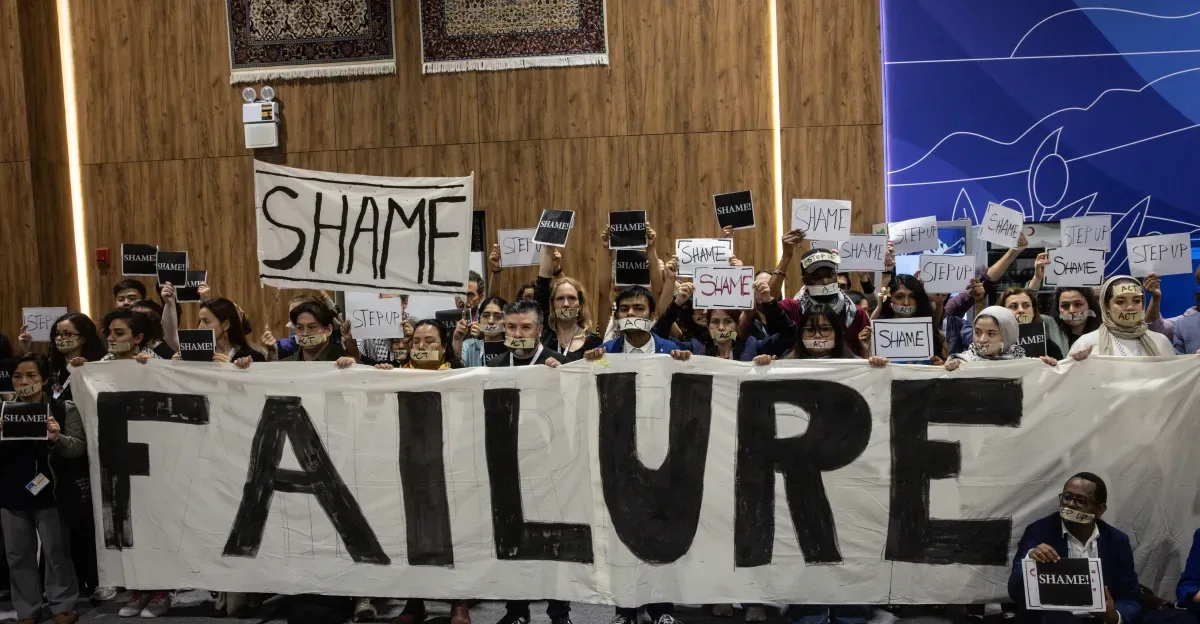 Image: The Verge Download
Delegates at the United Nations climate conference COP31 gathered in Antalya, Turkey, and left on Sunday without a signed pact, as the surge in AI‑powered data centers turned electricity demand into a contentious issue.
AI data centers reshape the climate agenda
The push to electrify the global economy is a central pillar of the Paris climate accord, yet the rapid expansion of power‑hungry data centers threatens to outpace renewable supply. Organisers hoped to lift electricity’s share of total energy consumption to 35 percent by 2035, up from roughly 20 percent today. According to The Verge, that target becomes harder to meet when AI data centers drive electricity demand upward.
Chris Bowen, Australia’s climate minister and president of the COP31 negotiations, told Politico that every climate minister is considering the issue and that it will inevitably surface in talks. The International Energy Agency forecasts that data centre electricity use could double by 2030, a growth that analysts say could push power‑sector emissions in the United States up 42 percent by the same year.
“That is a huge climate risk: rising power demand from data centres is not yet sustainable, and an AI boom cannot be allowed to become a fossil fuel boom,” Bruce Douglas, CEO of the Global Renewables Alliance, said in an email to The Verge.
Douglas added that data centres compete with other consumers for grid connections, financing and generation capacity, often outbidding essential services such as heating, cooling and electric transport.
Negotiations collapse and voluntary pledges emerge
Despite being the longest conference in history, official talks broke down after two extra days of debate. The proposed pact was rejected by the EU, the United Kingdom and several vulnerable nations because it omitted the term “fossil fuels.” The United States, still absent after the Trump administration withdrew from the Paris agreement, did not participate.
In the absence of a binding treaty, delegates turned to voluntary commitments. COP31 president Murat Kurum announced that about 80 nations signed a pledge to raise electricity’s share of energy consumption to 35 percent over the next decade, though the full list has not been released, according to Carbon Brief.
A second voluntary pledge, dubbed the Antalya AI pledge, urged data centres to run on “low‑emission energy.” The Natural Resources Defense Council called the pledge a step forward but warned it lacks enforceable measures. Critics note that the term could still allow natural gas, which emits less carbon than coal but contributes significant methane emissions.
Tech firms grapple with rising footprints
Major technology companies have pledged to reach net‑zero emissions, yet the AI boom has strained those goals. Meta’s latest sustainability report indicated a 45 percent year‑over‑year rise in climate pollution and a re‑evaluation of its net‑zero timeline. Google and Microsoft also report growing carbon footprints despite earlier commitments.
Many firms purchase renewable electricity to offset their use, but unless they invest in new green generation, they risk crowding out other sectors from limited renewable capacity. Douglas asked whether new green electrons should prioritize air‑conditioning, broader electrification or data centres, highlighting the competition for clean power.
Harvard researchers recently found that U.S. hyperscale data centres emit more climate pollution than the entire nation of Denmark, underscoring the scale of the challenge.
What happens next
- Countries may refine voluntary pledges into more concrete targets as pressure builds from environmental groups.
- Tech companies are likely to increase investment in renewable projects to secure dedicated power for AI workloads.
- Policy makers could consider mechanisms that prioritize essential services when allocating new renewable capacity.
Further reading
For more context on this story, explore these trusted outlets.