 N

Trending: India faces accelerating food inflation as monsoon shortfall hits prices Hottest news
Retail food prices rose to 8.9% in October, widening the gap with overall inflation and pressuring households.
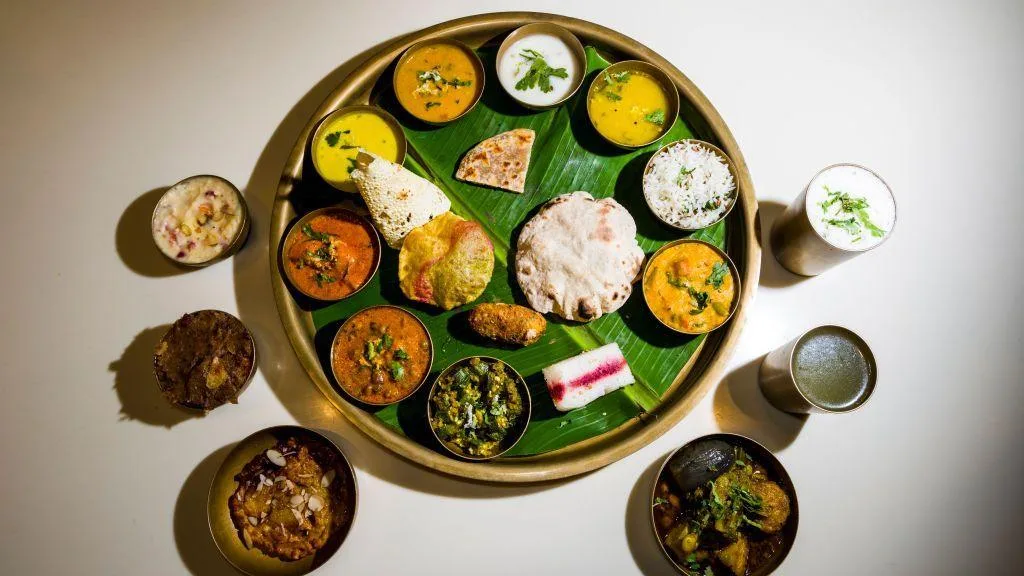 Image: BBC News Download
India's retail food prices jumped to 8.94% in October, according to the latest government data released on 25 November 2026, while overall inflation reached 6.09%. The surge was slightly higher in rural areas, where food inflation hit 9.09%, compared with 8.68% in urban centres.
Key factors behind the price surge
Economists point to a mix of weather anomalies, supply bottlenecks and rising input costs as the main drivers. The country relies on rain for nearly 60% of its cultivated land, and the southwest monsoon this year fell 13% below normal and arrived unevenly. El Niño conditions added further stress to farm output, according to BBC News.
Perishable items such as onions and tomatoes have amplified volatility. Onion stocks, which are harvested in March and April and stored for several months, tend to dwindle before the next crop, pushing prices sharply. Tomatoes often spike in summer when heat stress reduces yields.
Pushan Sharma, director of intelligence at Crisil, said, "It's no longer a few commodities that are driving this increase, it's becoming a little more broad-based." He noted that rice prices were up about 10% year‑on‑year, pulses 8%, edible oil 13% and LPG 10%.
Impact on household budgets
Food still accounts for the largest share of consumer price calculations, representing 36.75% of the basket used to measure inflation. Although the share has fallen from 45.86% in the previous series, rising food costs can still lift the overall inflation rate and hit low‑income families hardest.
Rajeswari Sengupta, an associate professor of economics at the Indira Gandhi Institute of Development Research, warned, "Adjustability for a poor country like India is significantly lower." She highlighted that a large portion of household income continues to be spent on food.
Data from analytics firm Crisil show a widening gap between income groups. In rural areas, the bottom 20% of households faced 6.9% inflation in October, versus 6.5% for the richest 20%. Urban figures were 6.1% for the poorest quintile and 5.3% for the richest. A Crisil analysis of the "Roti Rice Rate" revealed that a vegetarian thali cost 12% more year‑on‑year in October, while a non‑vegetarian thali rose 9%.
Because staples such as rice and wheat rise gradually but stay high for longer, families find it harder to substitute away from them. Sharma explained, "The perishables are what caused the volatility. The non‑perishables, like rice and wheat, are the ones that structurally increase the cost."
Infrastructure gaps and policy response
Experts say inadequate storage, grading and processing capacity for perishables amplifies price swings. Better facilities could turn surplus produce into value‑added products such as puree, smoothing the extremes between gluts and shortages.
Energy price shocks also feed into transport and irrigation costs, while global edible‑oil markets influence domestic prices because India imports a large share of its oil.
The government retains buffers that can soften the blow. Cereal stocks remain well above minimum required levels, and the public distribution system, which reaches nearly 800 million people, provides a safety net. Nevertheless, Sengupta cautioned that food inflation can trigger broader price pressures, stating, "Food inflation may begin with a supply shock, but its effects can spread. Workers who find that their wages no longer cover basic living costs may seek higher pay. Businesses facing higher labour costs may raise prices." This dynamic can evolve into a wage‑price spiral that central banks aim to avoid.
Policy tools such as minimum support prices for key crops, export restrictions and limits on trader stockpiles are often employed to curb sharp spikes in staples like onions and tomatoes. The political sensitivity of food prices adds another layer of complexity to the government's balancing act.
What happens next?
Analysts expect that a delayed monsoon and continued input cost pressures could keep food inflation elevated through the next quarter. Improving cold‑chain infrastructure and expanding domestic edible‑oil production are cited as potential mitigants, but their impact will likely be gradual. Monitoring of wage negotiations and corporate pricing strategies will be essential to gauge whether food‑driven inflation spreads to the broader economy.
Further reading
For more context on this story, explore these trusted outlets.