 N

Trending: Chapecoense Rebuilds After 2016 Plane Tragedy Hottest news
The club survived the loss of 19 players and returned to competition within weeks.
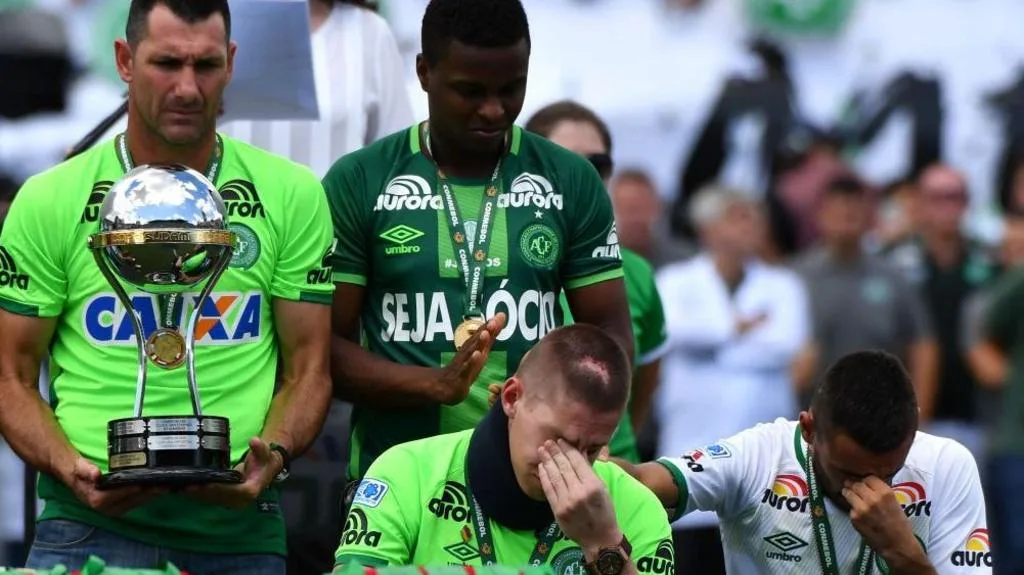 Image: BBC Sport Download
On 28 November 2016 a LaMia flight carrying the Brazilian side Chapecoense crashed near Medellín, Colombia, killing 71 people, including 19 of the club’s 22 players. The disaster occurred as the team travelled to contest the first leg of the Copa Sudamericana final, the most important match in its history.
The crash and its immediate impact
Investigators later determined that the aircraft ran out of fuel after failing to make a scheduled stop, a mistake attributed to the airline and its pilot, according to BBC Sport. The pilot, Miguel Quiroga, who also owned the airline, died in the impact and was heard on a leaked recording warning of a "total electric failure" and a "lack of fuel".
Only four passengers survived the crash: goalkeeper Jakson Follmann, defender Neto, defender Alan Ruschel and commentator Rafael Henzel. Henzel, who later died of a heart attack in 2019, had described the Copa Sudamericana as the team’s "World Cup" and said in 2017 that "if anyone's ever died happy, it was the people on that plane".
"It was our club secretary, Jorilda, who was desperate, screaming 'Ivan Ivan'.", Ivan Tozzo
Club vice‑president Ivan Tozzo received the frantic call while watching television in the stadium’s changing room. He later recalled the moment he decided to lead the club’s recovery, saying he felt a mission to keep Chapecoense alive.
Leadership amid grief
Tozzo, who had avoided travelling with the squad after a personal sense of unease, became the sole surviving director and assumed the role of interim president. He spent the following week coordinating flights for doctors, relatives and clergy, while arranging a memorial service in rain‑soaked conditions at the club’s Arena Condá.
During the ceremony, Atletico Nacional announced that it would request the Copa Sudamericana trophy and prize money be awarded to Chapecoense, a gesture that underscored the solidarity shown by the football community.
In the aftermath, Tozzo recruited former Gremio football director Rui Costa and appointed Vagner Mancini as head coach. Within weeks the club secured 22 new players, most on loan, to field a team for the upcoming season.
Survivors and the road to renewal
Goalkeeper Jakson Follmann, then 24, spoke of his shock at the timing of his personal life, noting he had been preparing for his wedding when the crash forced a two‑month hospital stay and the partial amputation of his right leg. He said, "Everyone was completely proud of everything they were doing, both for the team and for the community of Chapeco and the region."
Defender Neto described the final moments aboard the aircraft: "I remember the lights went out suddenly; then I started praying, asking God to help us." He later recounted the silence after the engines stopped, followed by a warning alarm.
Follmann called the incident a preventable crime, emphasizing that the decision not to refuel was driven by greed rather than necessity. To date, no individual has been convicted in relation to the crash, and legal proceedings have stalled due to jurisdictional challenges and the lack of a prosecutorial framework for negligent homicide in Bolivia.
What happens next
Two months after the tragedy, the surviving members, Neto, Ruschel, Follmann and the late Henzel, appeared together at a friendly match between Brazil and Colombia, symbolising the club’s determination to honour its fallen teammates.
Chapecoense continued to compete in Brazil’s national leagues, rebuilding its roster and maintaining the memory of the 2016 squad as a source of inspiration for players and supporters alike.
Further reading
For more context on this story, explore these trusted outlets.